Most B2B companies say they want a stronger sales pipeline.
What they usually mean is this: they want more qualified meetings, more consistent opportunities, and far less of that dreadful stop-start cycle where one month looks promising and the next resembles an abandoned retail park in February.
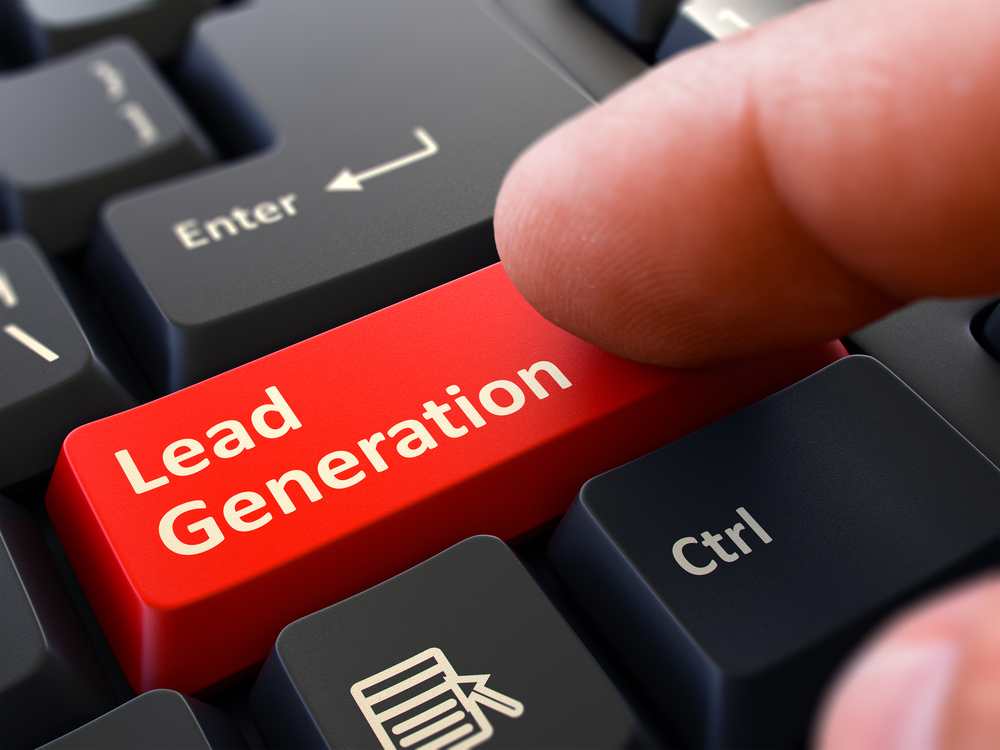
That is exactly where a scalable outbound lead generation strategy matters.
Because if your growth depends entirely on referrals, repeat business, or the occasional inbound enquiry drifting through your website, you do not have a system. You have hope. And hope, while lovely in poetry and wartime speeches, is not a sales strategy.
A proper outbound lead generation strategy gives your business control. It allows you to identify the right companies, reach the right decision-makers, and generate sales conversations consistently rather than accidentally.
For Canadian businesses looking to grow across Canada and the U.S., this matters even more. Competition is sharper, markets are broader, and waiting around for the ideal prospect to discover you is about as effective as bringing a canoe to a Formula 1 race.
If you are new to the topic, start with our guide to B2B lead generation in Canada, which breaks down why outbound is becoming essential for predictable growth. And if cross-border growth is on the agenda, our article on how Canadian companies can expand into the U.S. market explains why outbound is often the fastest route in.
What Is an Outbound Lead Generation Strategy?
An outbound lead generation strategy is a structured process for proactively finding and contacting companies that fit your ideal customer profile.
Instead of waiting for prospects to come to you, outbound means you go to them.
That outreach might include:
- targeted cold email campaigns
- LinkedIn prospecting
- outbound calling
- multi-touch follow-up sequences
- appointment setting with qualified prospects
The goal is not to harass half the internet with a generic pitch and hope somebody bites. The goal is to create a repeatable system that starts relevant conversations with the right people at the right companies.
Done properly, outbound becomes one of the most reliable ways to build a healthy sales pipeline.
Why Scalability Matters in Outbound Sales
Plenty of companies can generate a few leads when everyone is highly motivated, the market is buoyant, and somebody in sales has had three coffees before 9 a.m.
The real challenge is doing it consistently.
A scalable outbound lead generation strategy means your process can grow without collapsing under its own weight. It means you can increase outreach volume, improve targeting, and generate more meetings without descending into chaos.
In practical terms, scalability means:
- clear targeting criteria
- repeatable messaging frameworks
- documented outreach processes
- measurable performance data
- consistent follow-up across channels
Without those things, outbound quickly becomes random. One rep writes messages one way, another improvises wildly, nobody follows up properly, and the CRM starts to look like an archaeological site.
Step 1: Define Your Ideal Customer Profile
The first step in building an outbound lead generation strategy is deciding who you actually want to target.
This sounds obvious. It is obvious. And yet countless businesses skip it.
They target companies that are too broad, too varied, or simply wrong. Then they wonder why response rates are weak and meetings go nowhere.
Your ideal customer profile should include details like:
- industry
- company size
- geography
- revenue band
- team structure
- common pain points
- likely decision-makers
For example, if you help mid-market SaaS companies generate more qualified pipeline, then targeting every business from dental clinics to industrial suppliers is clearly absurd.
The narrower and more accurate your targeting, the better your outreach performs.
This is also where strong B2B sales strategy becomes essential. Good outbound is not just activity. It is strategic focus.
Step 2: Build a High-Quality Prospect List
Once you know who you want to target, you need a prospect list that is actually worth contacting.
And this is where things often go wrong.
Bad lists kill good outreach.
You can write the greatest cold email in Canadian business history, but if it lands in the inbox of the wrong person at the wrong company, it is wasted effort.
A solid prospect list should include:
- target company name
- industry and company size
- contact name and role
- email address
- LinkedIn profile
- notes on relevance or trigger points
Trigger points are especially useful. These might include recent hiring activity, expansion into a new market, fresh funding, a new product launch, or attendance at an event. They make outreach more timely and more convincing.
If your business needs help creating targeted prospect lists and turning them into live sales conversations, our B2B lead generation services are designed for exactly that.
Step 3: Create Messaging That Starts Conversations
This is the bit everyone wants to overcomplicate.
They write cold emails that sound like legal disclaimers. Or product brochures. Or management consultants trying to seduce a spreadsheet.
Effective outbound messaging is much simpler than that.
It should be:
- short
- specific
- relevant to the prospect
- focused on business value
- written like a person, not a committee
The objective is not to cram every feature, benefit, testimonial, and service line into a single message. It is to give the prospect a reason to reply.
That is why strong B2B email outreach works so well. It opens the door to a conversation rather than trying to force a sale in the first sentence.
A good first message might highlight:
- a challenge the prospect is likely facing
- a result you help similar companies achieve
- a reason you are reaching out now
- a low-friction call to action
For example, asking whether improving pipeline quality is a priority is usually far more effective than launching into a monologue about your “innovative solutions ecosystem”.
Step 4: Use a Multi-Channel Outreach Strategy
Relying on one channel alone is limiting.
If you send a single email and wait, you are not running outbound. You are tossing a paper plane into a hurricane.
The best outbound lead generation strategies combine multiple channels, including:
- phone outreach
- follow-up touches over time
Each channel reinforces the others.
A prospect might ignore your first email, notice your name on LinkedIn, see a second follow-up a few days later, and then answer when you call. That is not bad luck turning into good luck. That is how modern outbound works.
To support this, LeadPerk offers specialised services in LinkedIn outreach, B2B outbound calling, and B2B appointment setting so businesses can build proper multi-channel prospecting systems instead of relying on one tactic.
Step 5: Build Follow-Up Into the System
Most deals do not begin with the first touch.
They begin with the fourth, fifth, or sixth.
Which means most outbound campaigns fail not because the target market is wrong or the offer is weak, but because the follow-up is dreadful. Or nonexistent.
A scalable outbound strategy needs structured follow-up sequences that stay professional without becoming annoying.
That means:
- spacing touches sensibly
- varying the message angle
- using more than one channel
- tracking responses and engagement
- knowing when to stop
Follow-up is where consistency wins. Not glamour. Not cleverness. Just disciplined execution.
Step 6: Measure What Actually Matters
One of the great joys of outbound sales is that it can be measured properly.
One of the great dangers is that people measure the wrong things.
Vanity metrics are everywhere. Open rates. Profile views. Connection counts. All mildly interesting. None of them pay the bills.
The most useful outbound lead generation metrics are:
- positive reply rate
- meetings booked
- qualified opportunities created
- pipeline value generated
- conversion rate by channel
If your campaign sends thousands of emails and produces nothing but a warm feeling about “brand visibility”, something has gone terribly wrong.
The point of outbound is pipeline. Measurable, qualified pipeline.
Step 7: Refine and Scale What Works
Once the fundamentals are in place, you can begin scaling.
But scaling should come after performance, not before it.
If the targeting is sloppy and the messaging weak, sending more emails simply creates more inefficiency. It is like putting a louder exhaust on a car with no engine.
Instead, refine in stages:
- test different messaging angles
- compare industries or segments
- adjust job title targeting
- improve call-to-action language
- increase volume only after results are stable
This is how outbound becomes scalable. Not through brute force, but through repeatable optimisation.
Why Canadian Companies Are Investing More in Outbound
More Canadian businesses are turning to outbound lead generation because it solves a very specific problem: unpredictability.
Inbound can be valuable, of course. So can referrals. But neither gives you enough control if growth targets are ambitious.
Outbound allows businesses to:
- reach ideal accounts directly
- enter new regions more quickly
- test offers in the U.S. market
- generate meetings consistently
- support internal sales teams with qualified pipeline
That is why it works so well alongside market expansion. If you are targeting cross-border growth, read our article on expanding into the U.S. market from Canada to see how outbound supports that move.
And for a broader overview of the landscape, our pillar guide on B2B lead generation in Canada is a useful starting point.
Should You Build In-House or Outsource?
That depends on your timeline, your internal resources, and your tolerance for trial and error.
Building an in-house outbound team can work well, but it takes time. You need strategy, list-building, messaging, systems, testing, management, and ongoing optimisation.
For many businesses, outsourcing parts of the process is faster and more efficient.
That is especially true when you need results without spending six months assembling a sales development function from scratch.
LeadPerk supports Canadian businesses through outsourced lead generation and sales support services, including SDR as a service, email outreach, appointment setting, and event campaign lead support.
The Bottom Line
A scalable outbound lead generation strategy is not about sending more messages. It is about building a system that reliably turns the right prospects into real sales conversations.
That system starts with clear targeting, strong prospect lists, relevant messaging, multi-channel outreach, disciplined follow-up, and a willingness to measure what matters.
Do that well, and outbound stops being a gamble. It becomes an engine for B2B growth.
If your business wants to generate more qualified meetings across Canada and the U.S., LeadPerk helps companies build outbound systems that produce consistent pipeline, not occasional luck.
Contact LeadPerk to see how we can help you build a more scalable outbound lead generation strategy.